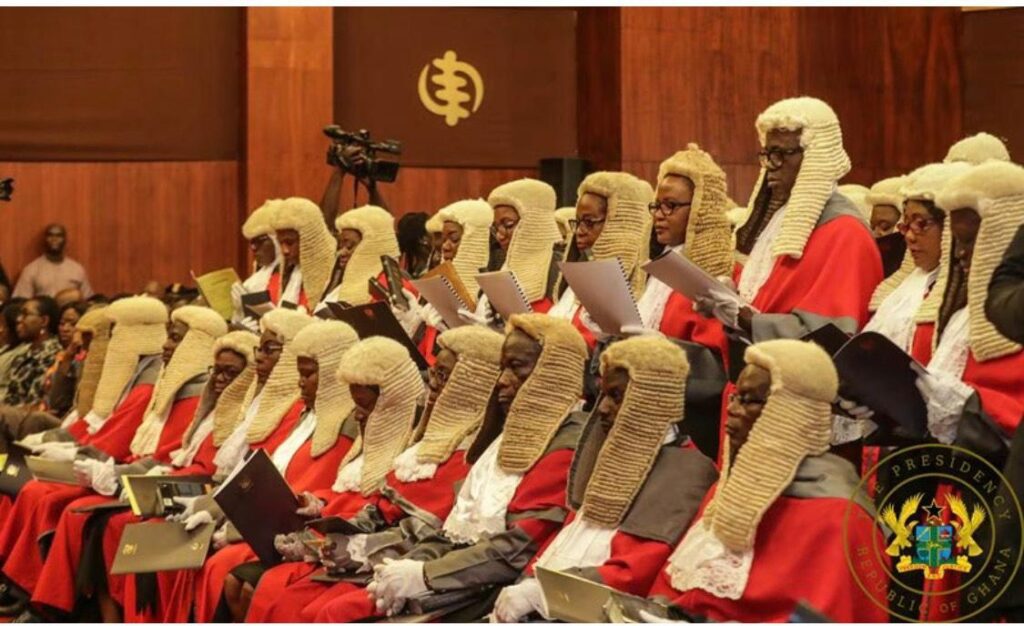
DEBT COLLECTORS IN ROBES: EXAMINING PROCEDURAL DEVIATIONS IN GHANA’S CRIMINAL JUSTICE SYSTEM.
Bertha Aniagyei*
PART III
DISADVANTAGES OF THE PRACTICE
Despite the various reasons for the prevalence of this debt collector mentality within certain courts, particularly in relation to criminal procedure, it is evident that its disadvantages significantly outweigh its advantages. This practice is detrimental to the accused individual, the complainant, the courts and the overall administration of criminal justice.
- Impact on the Accused -Restitution as an Implied Admission of Guilt
For the accused individual, the payment of money, particularly in cases where appropriation or dishonest appropriation is an element, can be interpreted as an admission of either the crime itself or, at the very least, one of its constituent elements. This diminishes the burden on the prosecution to prove each element of the offense in the event that the case goes to trial.
Moreover, the payment of money does not preclude the possibility of prosecution. The state retains the authority to pursue charges against an accused individual even after restitution has been made, as such payment does not legally conclude the case. A case is only effectively concluded through an acquittal and discharge or a conviction by a court following a trial.
Furthermore, the act of paying money does not serve as a valid defense against the charges. Consequently, an accused individual cannot rely on such payment as a defense if the prosecution opts to proceed to trial, even after the complainant has received the full amount involved in the offense or the amount demanded by the complainant and prosecution.
- Impact on the Complainant -Costs, Delays and Uncertainty
Although many victims/complainants may primarily seek restitution or reparation, the process of the accused individual making monetary payments does not necessarily benefit them for several reasons.
Initially, in the absence of a formal agreement, the accused individual pays the money voluntarily. This situation necessitates that the complainant be present in court on all adjourned dates in the expectation of receiving payment from the accused. The costs associated with traveling to and from court, both in terms of financial expenditures and the investment of time, are substantial.
Again, there exists the potential for unethical behavior among prosecutors and investigators, who may exploit the situation to misappropriate funds intended for complainants.
This issue typically arises in scenarios where the complainant is absent from court, resulting in payments made by the accused to the prosecutor. Frequently, the funds transferred from the accused to the prosecutor do not reach the complainant in a timely manner, if they are received at all.
Numerous instances have been documented in which complainants have expressed grievances to the court regarding the challenges they face in recovering funds that were designated for them but were instead received by the prosecutor or investigator.
Additionally, due to the lack of a formal agreement, the accused individual pays at their discretion, typically providing only whatever amounts they are able to present on any given adjourned date. This results in inconsistency regarding the timing and the amounts of payments made.
Furthermore, the absence of interest on the amount paid means that the complainant is unlikely to receive the true value of the money involved by the time the accused individual completes their payments.
iii. Impact on the Administration of Criminal Justice: Undermining Deterrence and the Rule of Law
The frequent adjournment of cases during this debt collection practice, sometimes extending over several years, prolongs their tenure in court and contributes to the perception of inordinate delays in case resolution. This perception engenders significant consequences, fostering public mistrust of the judicial system and diminishing societal reliance on the courts for dispute resolution.
Moreover, this procedural approach undermines the legislative intent behind the enactment of criminal laws. Criminal statutes, as public laws, are designed to utilize punitive measures as a deterrent against both convicted offenders and society at large from engaging in proscribed conduct.
For example, in response to the pervasive issue of fraudulent activities related to land transactions, the legislator, through the enactment of the Land Act, 2020 (Act 1036), increased penalties for such offenses with the aim of deterring individuals from engaging in the offence.
However, the debt collector procedure permits numerous individuals accused of these crimes to evade accountability. The absence of a proper trial leading to a conviction and the imposition of custodial sentences for such offenses precludes the necessary publicity needed to deter others from similar conduct.
- Impact on the Courts: Erosion of Judicial Authority
Furthermore, the adoption of the debt collector procedure by the courts effectively transforms the criminal process into a private affair, where the primary objective of arraigning an accused individual becomes the mere payment of restitution to the complainant, often without any formal reprimand from the judiciary.
It is arguable that this process encourages, rather than deters, criminal behavior. If an individual can commit fraud and, upon being charged, ultimately repay the victim under terms of their own choosing, there exists little incentive to refrain from such illicit conduct.
Consequently, the individual, along with others of a similar disposition, may persist in defrauding victims or engaging in fraudulent land transactions, utilizing the profits derived from these criminal activities to compensate complainants. Thus, the courts appear to facilitate rather than mitigate criminality. This gradual erosion of criminal law into the domain of civil law is detrimental to all stakeholders involved.
- THE WAY FORWARD: RESTORING THE INTEGRITY OF CRIMINAL JUSTICE
The challenge, therefore, is to reestablish sentencing as the appropriate context for restitution while firmly disentangling it from the trial process. This ensures that courts remain focused on issues of guilt and innocence during trials, and subsequently consider the mitigating impact of remorse and reparative actions.
Achieving this requires not only judicial vigilance but also the establishment of clear guidelines, legislative reinforcement, and a collective commitment by all stakeholders in the criminal justice system to resist the encroachment of debt collection practices within criminal proceedings.
- Judicial Responsibility and Adherence to Act 30
The primary responsibility of a competent judge is to apply the law impartially. It is therefore essential to encourage judges to adhere strictly to the provisions of criminal procedure as outlined in Act 30.
When presiding over a courtroom, judges may face the temptation to adhere to the practices established by their predecessors. If a predecessor had a tendency to prioritize debt collection in criminal cases, it is probable that prosecutors and attorneys familiar with that court would advocate for the continuation of such practices, asserting, “this is the established practice in this court.”
Judges must be encouraged to resist the inclination to perpetuate practices that lack legal sanction and to prioritize adherence to the law. Over time, prosecutors and attorneys will likely come to recognize and respect the law as it is articulated.
Perhaps, judges may find valuable insights and succour in the words of Lord Devlin, who, in his seminal work The Judge (1979), articulates at page 4:
“If a judge leaves the law and makes his own decision, even if in substance they are just, he loses the protection of the law and sacrifices the appearance of impartiality which is given by adherence to the law. He expresses himself personally to the dissatisfied litigant and exposes himself to criticism. But if the stroke is inflicted by law, it leaves no sense of individual injustice; the losing party is not a victim who has been singled out; it is the same for everybody he says. And how many a defeated litigant has salved his wounds with the thought that the law is an ass.”
- Public Education and the Role of Law Enforcement
Additionally, law enforcement agencies should take proactive measures to educate the public about the distinctions between civil and criminal matters, particularly when cases reported appear more civil in nature.
The police should not only provide education but also firmly decline to investigate such cases, as doing so represents a misallocation of their limited resources.
Engaging in the investigation of private matters diverts both human and financial resources away from issues that genuinely serve the public interest. This misallocation detracts from the resources that could otherwise be utilized to investigate and prosecute actual criminal offenses.
Furthermore, the judiciary, the Attorney General’s office, the Ghana Bar Association as well as other legal practitioners should take on the responsibility of educating the public about the availability of small claims courts, which can be accessed for the expedited resolution of minor financial disputes, rather than relying on law enforcement.
iii. Restorative Justice as a Balanced Alternative
Finally, it is imperative for the nation to explore alternative methods for resolving criminal matters, such as restorative justice. This approach has been successfully implemented in various countries to address criminal issues in a manner that promotes healing and reconciliation among the victim, the perpetrator, and the broader community.
Rather than emphasizing punitive measures, restorative justice seeks to uncover the underlying causes of criminal behavior. It also allows victims to express the impact of the crime on their lives and enables the community to articulate how the crime has affected its members. All of these efforts aim to facilitate the restoration of the harm inflicted upon the victim, society, and even the perpetrator.
Restorative justice has been demonstrated to contribute to a reduction in crime rates and to mitigate recidivism. It has illustrated that alternative approaches can be employed to foster a safe society without necessitating arrest, prosecution, and punitive measures against individuals.
- CONCLUSION
Towards a Criminal Justice System Beyond Debt Collection
Despite the inherent challenges associated with the administration of criminal justice, it is imperative that criminal law remains a matter of public justice to safeguard public safety.
Permitting illegal practices to supersede lawful procedures, solely due to difficulties encountered within legal frameworks, could precipitate disorder within the system.
It is the responsibility of judges, prosecutors, legal practitioners and law enforcement agencies to protect lawful criminal procedures from deterioration.
In the administration of criminal justice, Ghanaian courts must reaffirm their fundamental purpose: not as entities serving merely as debt collectors in robes, but as impartial arbiters of justice.
Nevertheless, reforms are essential to guarantee that victims, offenders, and the broader community derive equitable benefits from the criminal justice system.
END.
As always, it has been my distinct privilege to engage in this educational journey alongside you.
For those in the legal profession, I extend my best wishes for the upcoming legal year.
For those outside the profession, I am sincerely grateful for your decision to participate in this collective learning experience. Thank you.
*The author is a judge and an alumna of Harvard Law School.